
Sleep Apnea Treatment – Channahon, IL
Take Care of Your Body by Improving Sleep
Sleep apnea is a more common health problem than you might think in America. If you’re told that you snore loudly, or if you feel exhausted no matter how much sleep you get, call Grand Dental – Channahon today; our expert doctors have been trained to recognize the signs of sleep apnea and provide appropriate options for sleep apnea treatment in Channahon, IL.
Why Choose Grand Dental - Channahon for Sleep Apnea Treatment?
- Improve Your Overall Health
- Personalized Oral Appliances
- Multiple Experienced Dental Experts
Why Sleep Apnea is so Dangerous

The word apnea means “without breath”, and that should give you a good idea of why sleep apnea is such a problem. The disorder causes you to stop breathing multiple times during the night. If this happens, your body is forced to awaken to get some air. As a result, you won’t get enough sleep, and you’ll be both oxygen deprived and tired come morning.
Living with the exhaustion of sleep apnea isn’t just dangerous for you; you might inadvertently put others at risk if you end up drifting off to sleep while driving. Studies have found that people who are sleep-deprived pose just as much of a threat on the road as those who have been drinking.
Sleep apnea has also been linked to high blood pressure, irregular heartbeat, sudden heart failure, depression, and other dangerous health issues.
The Symptoms of Sleep Apnea
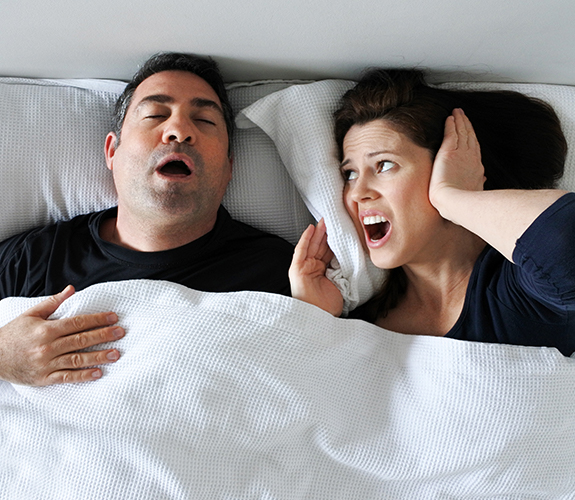
Loud snoring is one of the most common symptoms of sleep apnea. Other signs include excessive tiredness, waking up with a dry mouth or sore throat, insomnia and restlessness, and memory problems. Not all of these symptoms may manifest at once; if you notice any of them on a regular basis, reach out to us.
How We Can Help
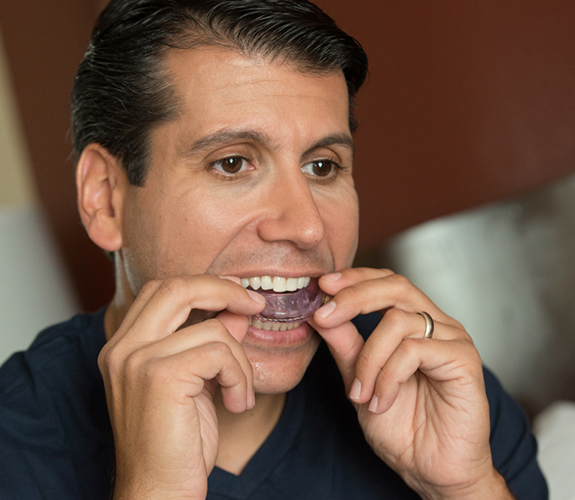
First, we’ll most likely need to work with your primary physician to have a sleep study performed. Then we can start discussing treatment options. If you find that you have trouble using a bulky, noisy CPAP machine, we can design a sleep apnea device that can be worn like a nightguard to gently keep the mouth and throat open so that you can breathe easily during the night.
Sleep Apnea FAQs
Does everyone who snores have sleep apnea?
No, snoring does not automatically mean that you have sleep apnea. Also, you may have sleep apnea without snoring. This is only one symptom and not the sole indicator. Only a sleep study can determine if you experience apnea episodes and, if so, how often they occur.
It is believed that nearly 20 million people in the U.S. have sleep apnea, but too often, the symptoms are disregarded or misdiagnosed. That's all the more reason to seek professional help from a team that cares about your sleep patterns and overall health.
Can I diagnose sleep apnea on my own?
Just because you exhibit some (or many) of the symptoms associated with sleep apnea does not mean you have it. Different technologies can help indicate a potential problem, such as an Apple Watch, but they cannot deliver the kind of results a sleep study can. This is why you should see a member of our team who can make sure you receive a formal sleep test. Once a sleep doctor analyzes the collected data, they can determine whether you have sleep apnea and, if so, its type (obstructive sleep apnea, central sleep apnea, etc.).
How soon after starting sleep apnea treatment will I notice improvement?
This is one of the most common questions patients ask our team. When you wear an oral appliance to treat obstructive sleep apnea (OSA), you may notice a difference almost immediately. It is normal to need time to adjust to the appliance, so it may take one or two days to get used to how it feels in your mouth.
What will ultimately tell our team how well your oral appliance is working is having you complete another sleep test. If you notice that your symptoms subside, trust that your device is working as it should.
Are there at-home remedies for sleep apnea?
Nothing can replace the effectiveness of a custom oral appliance for treating sleep apnea, but there are things you can do at home to improve your symptoms. In addition to wearing your device, you can avoid looking at your phone or any other screen when preparing to go to bed. You can also increase your physical activity throughout the day, as this will help you fall and stay asleep throughout the night.
Only your oral appliance will address the underlying problem causing airway obstruction, so make sure you wear it every night.